What to Know Before Flying With Pets Abroad
Figuring out what to know before flying with pets abroad nearly broke me the first time I tried it. I spent three sleepless nights buried in contradictory government websites, airline policy pages that hadn’t been updated since 2019, and Reddit threads that scared me half to death. My 30-pound mutt, Biscuit, needed to fly from Texas to Portugal with me. The process was confusing, expensive, and emotionally exhausting. But I got through it, and now I know exactly what I’d do differently.
Start With Your Destination Country’s Import Requirements
This is the single most important step, and it’s where most people mess up. Every country has its own rules about bringing animals across its borders, and those rules can vary wildly. The EU requires a microchip, a valid rabies vaccination given at least 21 days before travel, and an EU Animal Health Certificate. Japan requires a rabies antibody titer test done at least 180 days before arrival. Australia and New Zealand have some of the strictest quarantine rules on the planet.
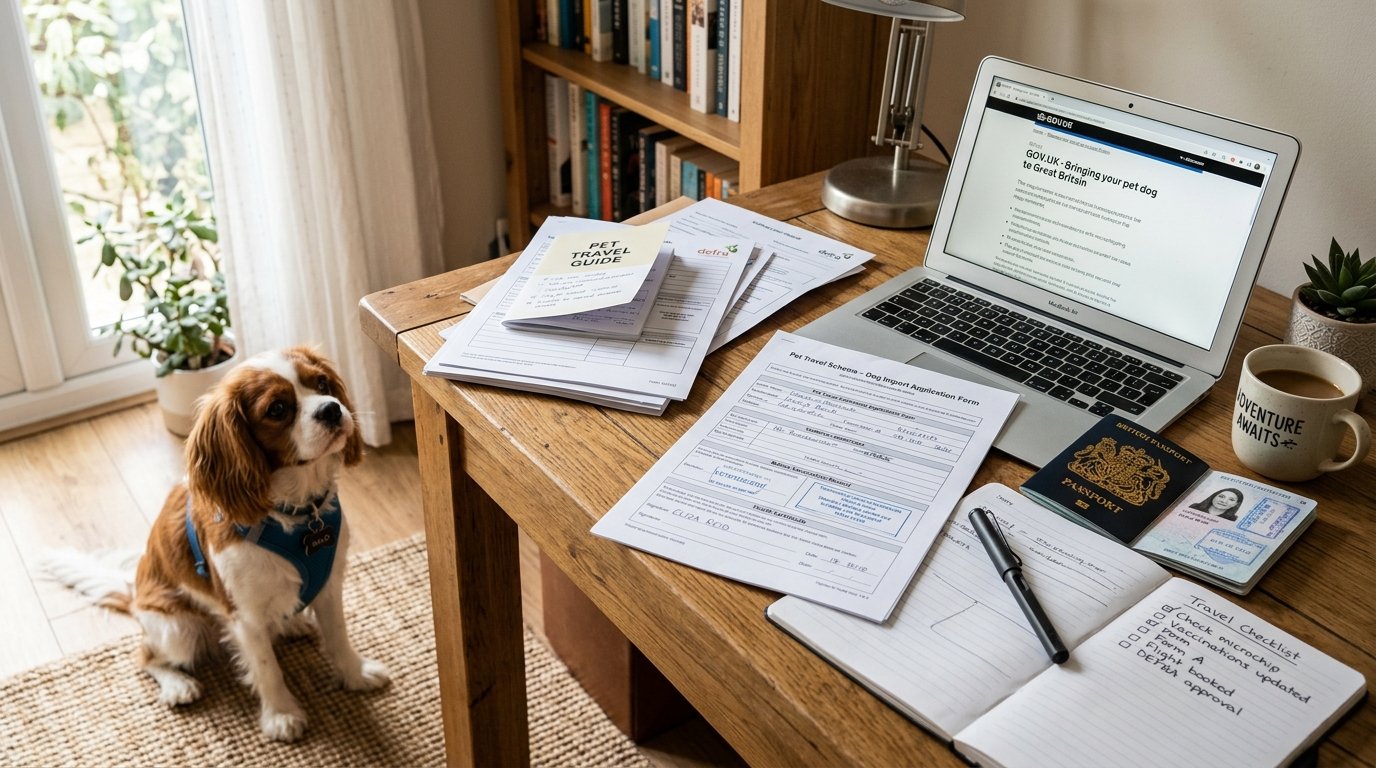
Don’t rely on blog posts (yes, including this one) as your only source. Go directly to the official government website of your destination country. Search for their animal import or veterinary authority page. For EU countries, the TRACES system handles the paperwork. For the UK, check DEFRA. The USDA APHIS website is your starting point if you’re flying out of the United States.
I made the mistake of assuming Portugal’s rules were the same as Spain’s because they’re both in the EU. They mostly are, but processing timelines and document formats had small differences that almost caused problems at check-in. Start here first. Everything else flows from this.
Choose the Right Airline Early
Not every airline allows pets, and the ones that do have very different policies. Some airlines let small dogs and cats ride in the cabin in an approved carrier under the seat. Others only allow pets in the cargo hold. A few, like certain Middle Eastern carriers, don’t allow pets at all on passenger flights.
I flew Biscuit on TAP Air Portugal, which allows small pets in the cabin on transatlantic flights for a fee of around $200 each way. Lufthansa and Air France also have solid pet policies. Delta and United allow pets in cabin on some international routes, but their cargo pet programs (Delta Cargo and United PetSafe) have specific seasonal and breed restrictions.
Book your flight early because most airlines cap the number of pets per flight. On my second trip, I waited too long and had to rebook on a different date because the pet spots were full. Also, call the airline directly after booking. Online booking systems don’t always let you add a pet, and you want verbal confirmation plus a booking reference that includes your animal.
Also Read: Vegetarian Travel Destinations and Restaurants I Love 2026
Get the Veterinary Paperwork Done Right
Paperwork is where international pet travel gets genuinely stressful. For most destinations, you’ll need a health certificate issued by a licensed veterinarian and then endorsed (stamped) by your country’s official veterinary authority. In the US, that means a USDA-accredited vet fills out the certificate, and then you send it to your local USDA APHIS Veterinary Services office for endorsement.
Here’s what tripped me up: the health certificate is only valid for 10 days from the date of the vet exam to the date of travel. That window is tight. If your flight gets canceled or delayed beyond those 10 days, you start over. I scheduled my vet visit exactly 7 days before departure to give myself a small buffer for USDA processing.
Some APHIS offices accept walk-ins. Others require appointments and have multi-day processing times. Check your local office’s current turnaround. I used the APHIS online portal called VEHCS (Veterinary Export Health Certification System), which sped things up because my vet submitted everything electronically.
Microchipping and Vaccination Timing
Your pet’s microchip must be implanted before the rabies vaccine is administered, not after. Many countries require ISO 15-digit microchips (the international standard). If your pet has a different chip type, bring your own compatible scanner or adapter. The rabies vaccine must be current, and for most countries, it needs to have been given at least 21 days before arrival. Puppies and kittens under 12 to 16 weeks old usually cannot travel internationally because they haven’t completed their vaccination schedule yet.
Pick the Right Pet Carrier
Your carrier choice depends on whether your pet flies in the cabin or in cargo. Cabin carriers must fit under the seat in front of you. Most airlines specify maximum dimensions around 17 x 12.5 x 8.5 inches, but check your specific airline because measurements vary.
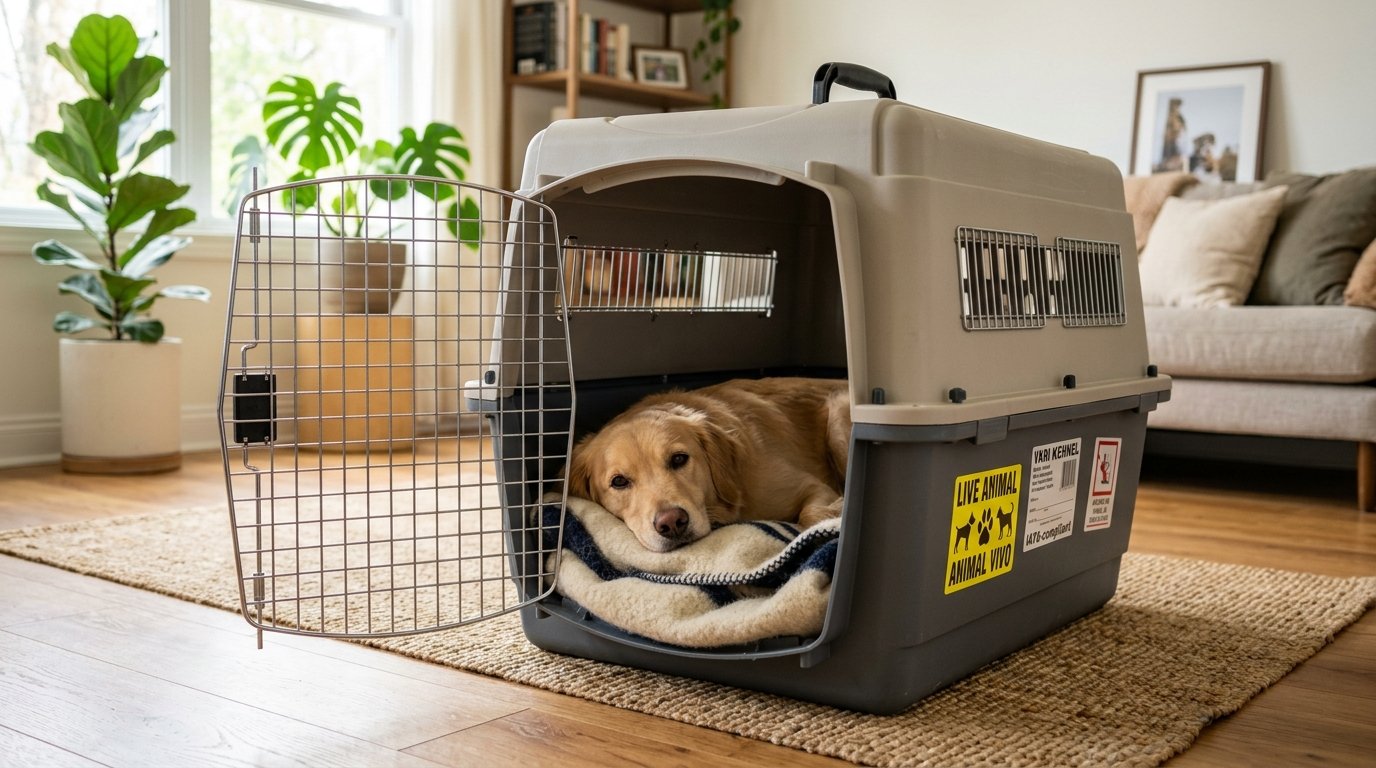
For cargo travel, you need an IATA-compliant hard-sided crate. These have specific requirements: ventilation on at least three sides, a solid leak-proof bottom, food and water dishes attached inside, and “Live Animal” stickers on the exterior. I bought a Petmate Sky Kennel for Biscuit’s first flight, and it met every airline and IATA standard without issues.
Here’s a tip that saved me a lot of anxiety. Let your pet sleep in the carrier at home for at least two to three weeks before the flight. Biscuit went from panicking inside his crate to voluntarily napping in it. That acclimation made the actual travel day so much smoother. Throw treats in there, feed meals inside it, make it their happy place.
Understand What to Know Before Flying With Pets Abroad Regarding Costs
Nobody talks enough about how expensive this whole process is. Let me break down what I actually spent flying Biscuit from Houston to Lisbon:
- Airline pet fee: $200
- USDA health certificate endorsement: $38
- Vet exam and paperwork: $175
- IATA-approved crate: $120
- Microchip (already had one, but typically $50 to $75)
- Rabies titer test (required for some destinations): $150 to $300
My total came to about $535 one way. If your pet flies cargo on a larger airline, cargo fees alone can run $500 to $2,000 depending on the route and the animal’s size. Companies like PetRelocation or Air Animal offer full-service international pet shipping, but their fees start around $2,000 and can exceed $5,000 for long-haul flights.
Budget for the unexpected too. My vet needed to redo one form because of a date discrepancy, which cost me an extra office visit fee. Things go wrong. Pad your budget by at least 15 to 20 percent.
Prepare Your Pet for the Flight Day
The 24 hours before flying matter more than you’d think. Feed your pet a light meal about four hours before departure. A full stomach plus turbulence equals a mess inside a carrier, trust me on that one. Offer water right up until you leave for the airport, then attach a small drip-style water bottle or ice cubes in the carrier dish so they can hydrate without spilling everywhere.
Skip sedatives unless your vet specifically prescribes them. The American Veterinary Medical Association actually advises against sedating pets for air travel because sedation can affect breathing and heart rate at altitude. I gave Biscuit a calming chew (Zesty Paws brand) about two hours before the flight, and he was mellow but alert.
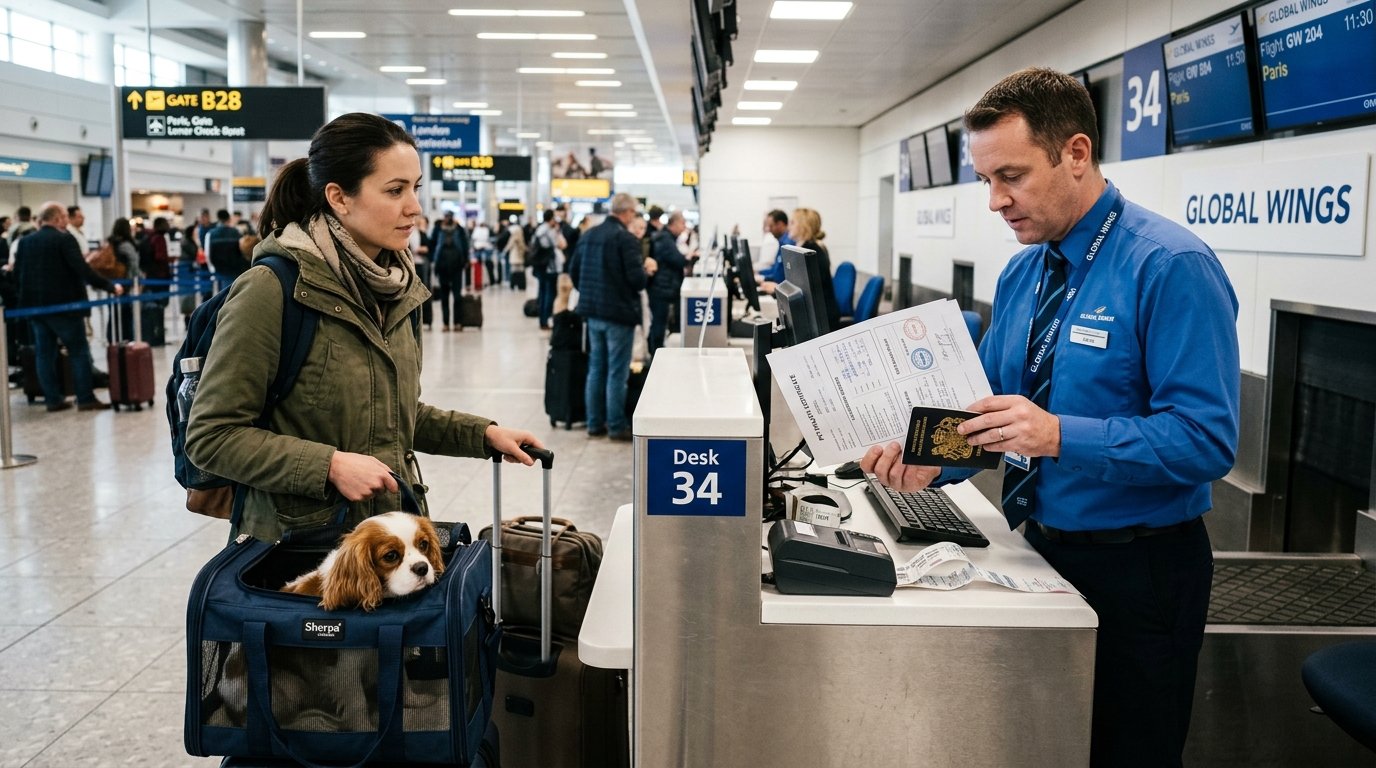
Arrive at the airport early. I’m talking three hours minimum for international flights with pets. You’ll need to check in at the counter (not a kiosk), present your health certificate and vaccination records, have the airline verify your carrier dimensions, and sometimes go through a secondary inspection. Rushing through this process is a recipe for panic.
Know the Rules for Layovers and Connections
Connecting flights add a whole layer of complexity when you’re traveling with an animal. If your layover is in a different country, your pet might technically be “entering” that country, which could trigger additional import requirements, health screenings, or quarantine protocols.
When I flew Houston to Lisbon with a connection in Frankfurt, Biscuit stayed in his carrier with me the entire time. Since we never left the transit zone and Germany is in the EU (same destination zone as Portugal), we didn’t need separate German import paperwork. But if my layover had been in London, post-Brexit UK rules would have applied, and that would have been a nightmare of additional documentation.
Direct flights are always the safer choice when flying with pets internationally. Yes, they’re often more expensive. But you eliminate the risk of your pet getting lost during a cargo transfer, you reduce total travel time and stress, and you avoid dealing with a second country’s regulations. If a direct flight exists on your route, take it.
Have a Plan for Arrival
Landing is not the finish line. Depending on your destination, you might face a customs inspection of your pet’s documents, a quick physical exam by a port veterinarian, or in some countries, a mandatory quarantine period. Australia requires a minimum 10-day quarantine. Hawaii (technically domestic but treated differently) requires up to 120 days unless you complete their specific pre-travel protocol.
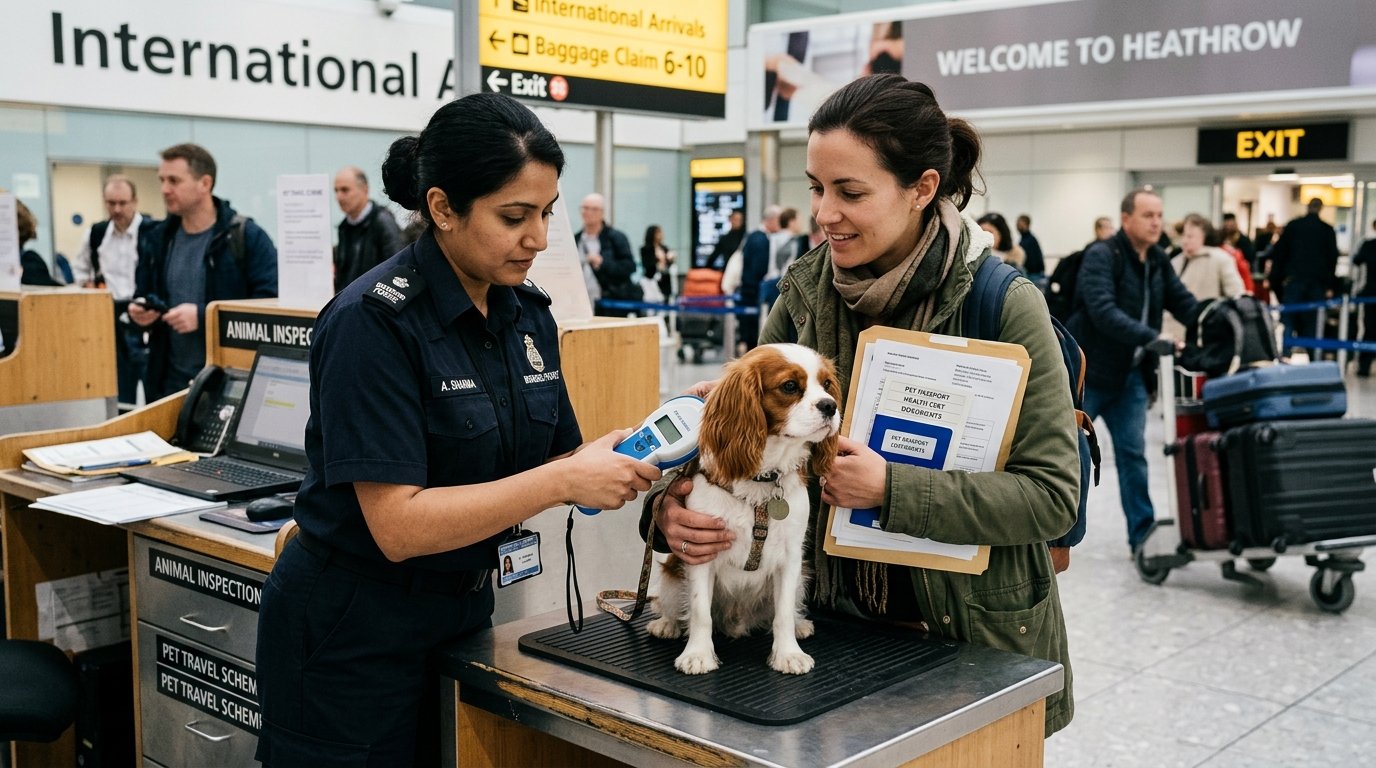
When I arrived in Lisbon, a customs officer checked Biscuit’s EU health certificate and microchip number, scanned him to confirm the chip matched the paperwork, and waved us through in about 15 minutes. It was anticlimactic after months of preparation, which honestly felt amazing.
Have a printed copy of every document in a folder you can access immediately. Don’t rely on your phone. Airport Wi-Fi fails, phones die, and border officials want paper. I also kept digital backups in Google Drive just in case, but the paper copies were what they actually looked at.
FAQs
Can I fly with my pet internationally without a health certificate?
No. Almost every country requires an official veterinary health certificate for incoming animals. Without one, your pet will likely be denied boarding by the airline or refused entry at the destination. Some countries also require the certificate to be endorsed or stamped by a government veterinary authority before departure. Don’t skip this step.
How far in advance should I start preparing to fly with my pet abroad?
Start at least three to four months before your travel date. Some destinations require rabies titer tests with waiting periods of 90 to 180 days. Microchipping, vaccinations, vet appointments, and government paperwork all need to happen in a specific sequence. Rushing the timeline almost always leads to missed deadlines or rejected documents.
What breeds are restricted from flying internationally?
Brachycephalic (snub-nosed) breeds like Bulldogs, Pugs, and Persian cats face restrictions on many airlines because they’re prone to breathing issues at altitude. Some airlines ban them from cargo entirely. Others allow them in cabin only during cooler months. Check your airline’s restricted breed list before booking anything.
Is pet travel insurance worth buying for international flights?
It depends on your risk tolerance, but I’d say yes. Companies like Petplan and Nationwide offer travel-specific add-ons that cover emergency vet visits abroad, trip cancellation due to pet illness, and lost carrier reimbursement. My policy cost about $45 for a single international trip, and the peace of mind alone was worth it.
What should I know before flying with pets abroad if my dog is large?
Large dogs almost always fly in the cargo hold in an IATA-approved crate. Cargo fees are significantly higher than cabin pet fees, often $500 to $2,000 per flight. Temperature restrictions apply too. Most airlines won’t transport pets in cargo when ground temperatures exceed 85°F or drop below 20°F at any point along the route.
Conclusion
Flying internationally with a pet is one of those things that feels impossible until you’ve actually done it once. After that, it just feels like a lot of paperwork with a really good reward at the end. Biscuit has now crossed the Atlantic twice, and he handles it like a seasoned traveler. If you’re gearing up for your first international flight with your pet, what part of the process stresses you out the most?
Leave a Reply